

“We’re always ordering too much or too little.”
It’s one of the most common frustrations we hear from owners and operations managers of wholesale, distribution and light manufacturing businesses.
One month the warehouse is overflowing with slow-moving stock. The next, a key product is unavailable and customers are waiting.
Many businesses assume this is simply part of running an inventory-based business.
In many cases, it doesn’t have to be.
Most buyers are good at their jobs. They understand their products, know their suppliers and have developed strong instincts over time.
The problem is that as a business grows, purchasing decisions become harder to make using instinct alone.
Ultimately, good purchasing comes down to one thing: confidence.
When buyers have confidence in the information they’re working with, purchasing becomes proactive and predictable. When that confidence starts to decline, decisions become increasingly reactive—and that’s when businesses begin ordering too much or too little.
What Every Purchasing Decision Really Depends On
Every purchasing decision is trying to answer the same question:
How much stock do we need before the next shipment arrives?
To answer that confidently, you need three things:
- How quickly the product is selling.
- How long it will take to replace.
- How much buffer stock is appropriate if demand changes or deliveries are delayed.
That sounds straightforward, but the reality is that none of those factors remain constant. Customer demand shifts over time, suppliers can experience unexpected delays, freight schedules are often disrupted, and lead times may increase or decrease without much notice. On top of that, products can become seasonal or fluctuate in popularity. When these changes aren’t reflected in your purchasing decisions, ordering quickly becomes little more than an educated guess.
Why Purchasing Confidence Starts to Break Down
Businesses rarely wake up one morning and suddenly lose control of purchasing. Instead, it happens gradually as small changes begin to accumulate over time. Supplier lead times might quietly drift from four weeks to six, while demand for a product increases without anyone noticing. At the same time, inventory records can become less reliable, safety stock levels go unreviewed, and reorder points that were set years ago remain unchanged.
Individually, none of these issues seem significant. However, together they begin to create uncertainty. As that uncertainty grows, buyers start to lose confidence in the numbers they rely on and naturally fall back on experience and caution. Some respond by ordering extra stock “just to be safe,” while others delay purchasing because they believe there is more stock available than there actually is. Neither response is unreasonable, but both are clear signs that confidence in the underlying information has started to decline.
The Cost of Getting It Wrong
Ordering too much doesn’t simply fill the warehouse; it quietly ties up cash that could be invested elsewhere in the business, increases storage costs and raises the risk of slow-moving or obsolete stock. Carrying excess inventory isn’t free, and over time those hidden costs begin to add up. Inventory carrying costs—including storage, insurance, handling, obsolescence and the cost of capital tied up in inventory—can become a significant ongoing expense. APQC’s cross-industry benchmarking reports a median inventory carrying cost of around 10% of average inventory value, although the actual figure will vary depending on the industry, product mix and operating model.
Source: APQC Open Standards Benchmarking – Inventory Carrying Cost Percentage.
Ordering too little creates a different set of challenges. Customers are left waiting, sales opportunities are missed and purchasing teams often find themselves paying for expedited freight to recover lost time. Meanwhile, warehouse staff shift from following a planned replenishment process to constantly juggling priorities. Over time, both situations erode profitability.
The goal isn’t to eliminate every stock shortage or hold no excess inventory, but to make purchasing decisions with greater confidence and consistency.
Why Inventory Accuracy Matters
Purchasing decisions are only as good as the inventory information behind them. If your inventory records aren’t accurate, even the most experienced buyer is effectively working with unreliable data.
This is why purchasing and inventory accuracy are so closely connected. For example, if the system shows 120 units available when there are actually only 85, every purchasing decision that follows starts from the wrong position.
As a result, improving purchasing often begins with improving confidence in your inventory.
Getting Purchasing Back Under Control
proving purchasing isn’t about asking buyers to work harder.
It’s about giving them better information.
That means regularly reviewing:
- Actual product demand.
- Supplier lead times.
- Inventory accuracy.
- Reorder quantities.
- Safety stock levels.
- Supplier performance.
The businesses that consistently purchase well aren’t relying on guesswork.
They’re making decisions based on current information rather than assumptions made months ago.
Questions Worth Asking
If purchasing has become increasingly difficult, ask yourself:
- When did we last review our supplier lead times?
- How confident are we in our inventory figures?
- Are we carrying excess stock because we’re uncertain about future supply?
- How often do products run out sooner than expected?
- Are reorder quantities based on current demand or historical assumptions?
- Do we regularly review which products deserve higher or lower safety stock?
If those questions raise a few concerns, it’s worth understanding what’s driving the uncertainty before it becomes more expensive to manage.

Already using Cin7?
Cin7 Foresight AI uses your sales history to anticipate future stock needs and support purchasing decisions — keeping inventory levels steady and reducing the risk of running short or overstocked. With 15 years’ experience across Cin7 Core and Omni, we can help you decide if Cin7 is the right fit, or whether Cin7 Foresight AI is worth adding if you’re already on the platform.
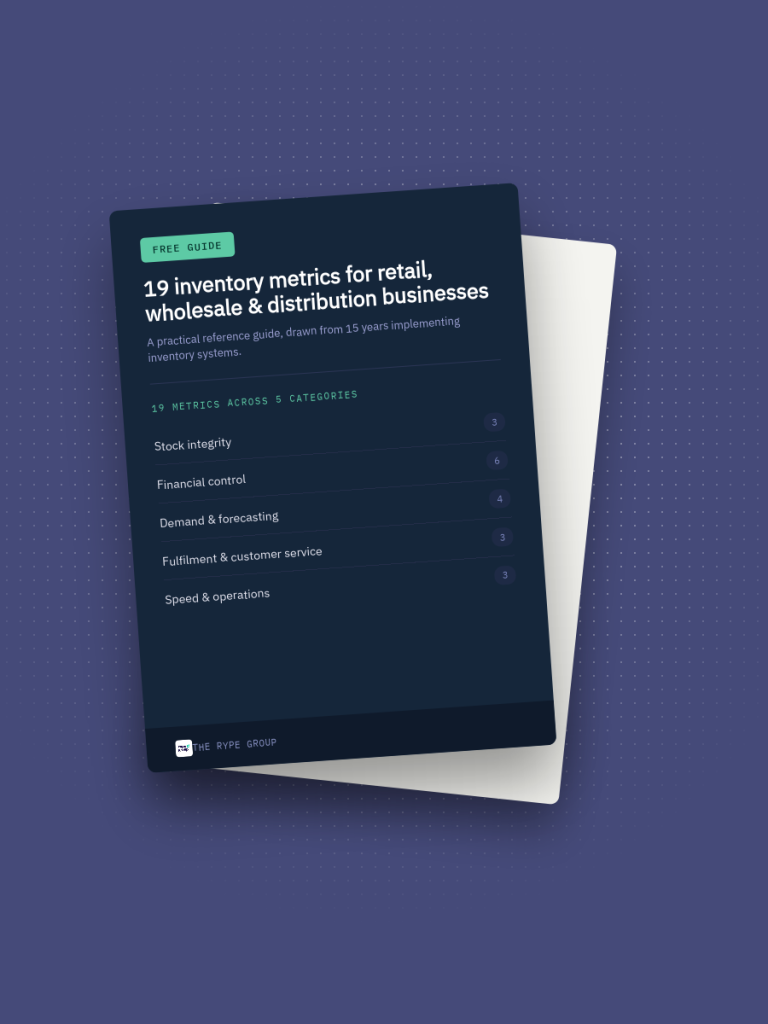
19 Inventory Metrics for Retail, Wholesale & Distribution Businesses
Our 19 Inventory Metrics Guide explains the key measures that help wholesale, distribution and light manufacturing businesses improve purchasing, inventory visibility, stock integrity and operational performance.
Understanding these metrics gives you a practical framework for making more informed purchasing decisions and identifying issues before they become costly.